

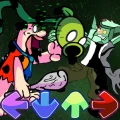
Glitched Legends Battle Finn
Phampham
I spent time with Glitched Legends Battle Finn as a music-focused game, and my first impression was that it works best as a short, character-driven distraction rather than a broad entertainment platform. Its premise places Finn in a strange world affected by corruption, giving each session a playful but slightly uneasy atmosphere. That contrast is useful: the game feels more distinctive than a simple collection of familiar songs, yet it remains approachable when I only have a few minutes.
The game is free, developed by Phampham, and aimed at a Teen audience. It has reached over 500 thousand installs and holds a 4.5 average from roughly 5.5 thousand ratings, which suggests that its unusual presentation has found a steady audience. I would not treat those figures as a guarantee that everyone will enjoy it, though. The important question is whether you want a music game with a glitchy adventure flavor, or whether you are actually looking for a polished rhythm trainer, a deep story game, or a simple family title.
How it fits into a shared household
In my household, a game like this makes sense as a shared-device option when one person wants to play while someone else is nearby. It is easy to imagine taking turns on a phone or tablet: one player handles a section, another tries to improve the result, and the device moves back and forth without requiring a long appointment. That kind of use is more realistic here than expecting everyone to maintain a large, ongoing multiplayer routine.
The music category gives the game a natural role during small breaks. I would use it while waiting for an appointment, during a quiet evening, or when a younger household member has finished homework and wants something more active than watching a video. The corrupted-world theme also gives people something to discuss between attempts. Instead of merely asking who scored higher, you can talk about the strange setting and how Finn’s mission is presented.
There is a practical limitation to shared play: the game is still installed and played on one device, so the experience depends on how clearly people agree to take turns. I would not assume that progress, preferences, or results are automatically separated between household members. If several people use the same phone, I would treat the current play session as belonging to whoever is holding the device and avoid promising that each person has a private record.
Related News





The best shared-device use is informal turn-taking, not a substitute for separate player accounts. That distinction matters if you are choosing a game for siblings, roommates, or a parent and child. It is a comfortable pick for occasional handoffs, but I would choose a title with clearly defined profiles if personal progress and independent settings are essential.
What the first session feels like
The opening experience is shaped by the combination of music and the corrupted setting. I found that this gives the game a stronger identity than a generic tap-along product. The atmosphere encourages curiosity, while the familiar idea of responding to music keeps the basic appeal easy to understand. You do not need to be deeply invested in a complicated fictional universe before trying it.
For a shared device, I recommend starting with a short demonstration rather than handing the phone over with no explanation. Show the next player how you prefer to hold the device, where the important visual cues appear, and when a turn ends. This is not about inventing a formal tutorial routine; it simply prevents the first few minutes from becoming a struggle over controls. Music games can look obvious from a distance while feeling surprisingly sensitive in the hand.
Gallery
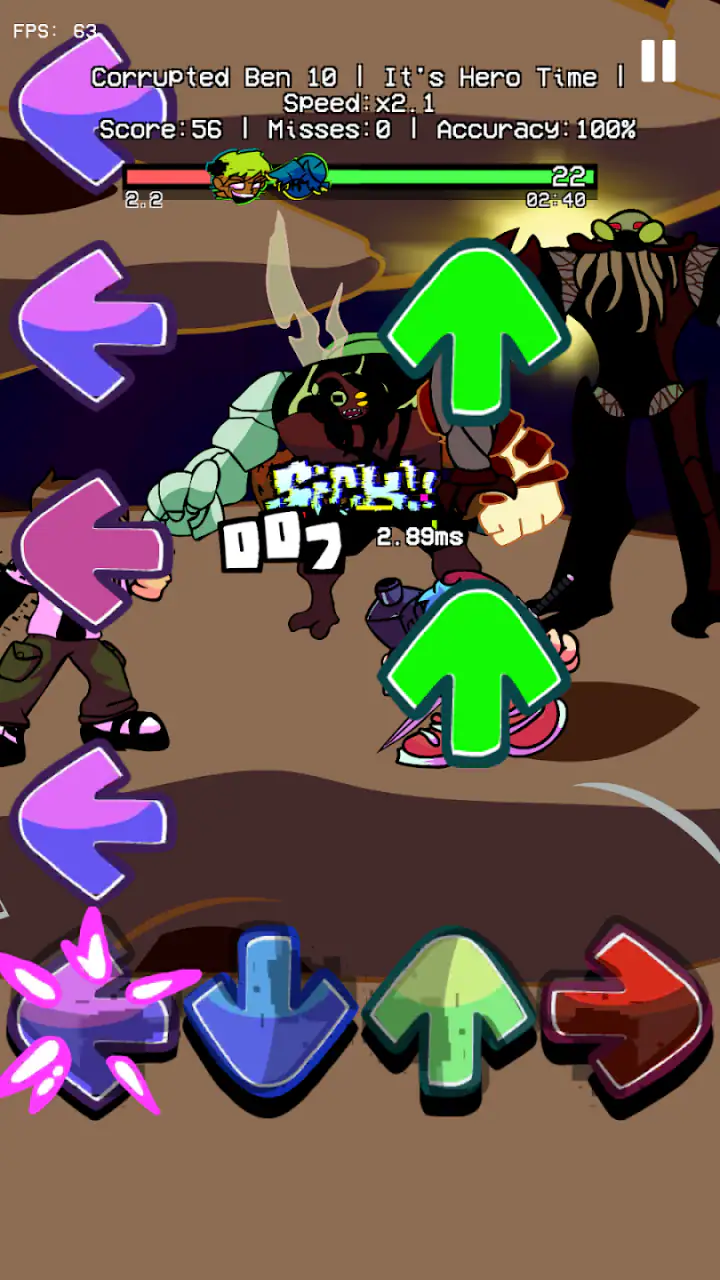
I also found that sound changes the social experience. With audio available, another person can follow the rhythm and understand why a moment felt successful or awkward. In a quiet room, the visual side becomes more important, but the game loses some of the energy that makes it suitable for the music category. Headphones can make a solo session more focused, while a speaker is better when people are watching together, provided the environment allows it.
Setting boundaries before passing over the device
Because the content rating is Teen, I would not place this in the same category as a preschool music toy. That does not mean every teenager will like it, or that an adult must supervise every minute. It does mean that parents should look at the game’s tone and decide whether the corrupted-world presentation fits the child using the device. A short conversation before installation is more useful than assuming that every music game has the same audience.
On a shared phone, I would also agree on ordinary device rules first: how long each person gets, whether sound is permitted, and who is responsible for stopping when the owner needs the device back. These are household decisions rather than game features, but they affect whether the experience stays enjoyable. A free game can still create friction if one player treats a short break as an invitation to occupy the phone indefinitely.
Another boundary concerns attention. Music games reward concentration, so interrupting someone mid-attempt can be more annoying than interrupting a turn-based puzzle. When I play, I prefer to finish a musical passage before switching tasks. If children are sharing a device, a simple “finish this attempt, then pass it on” rule works better than demanding an immediate handoff at an arbitrary moment.
The game is free, which removes the initial purchase barrier and makes trying it with a household easier. I still would not describe “free” as a complete decision guide. The more important costs are device time, attention, storage space, and the possibility that a player becomes frustrated if the music interaction does not match their expectations. I would install it because the entry point is easy, but keep the same practical limits I would use for any other game.
Coordinating turns without turning play into a chore
For two people, I like a simple rotation: one attempt each, then a brief comparison of what felt difficult. This keeps the focus on the music instead of making every round a high-pressure contest. If one person is much more experienced, alternating immediately can feel unfair, so giving the newer player a few relaxed attempts first is sensible. The game is more enjoyable when improvement is visible, not when every turn becomes a public test.
A useful approach is to change the goal from “beat the other player” to “understand one difficult section.” That is especially helpful with a parent and child pairing. The adult can ask what the player was listening for or watching on screen, while the child can explain the timing in their own words. This turns the game into a small coordination activity without pretending that it is an educational music course.
I would avoid making household rankings too serious. A music game can expose differences in reaction speed, familiarity, confidence, or simply who has had more practice. If the same person always wins, the weaker player may stop wanting to participate. Comparing approaches, celebrating a cleaner attempt, or letting someone choose the next session’s order creates a healthier rhythm than tracking every result as if it were a tournament.
For solo use, I recommend playing in short focused blocks. The corrupted setting and musical timing work well when I am alert, but the experience is less satisfying when I am multitasking or repeatedly checking messages. If you are using it as background entertainment while doing something else, a less demanding music app may suit you better. This game asks for active attention, even if the session itself can be brief.
Age, trust, and the right kind of supervision
The Teen rating is the clearest signal for households deciding who should use it. I would show the game to a younger child only after checking the tone personally, rather than relying on the word “music” to suggest that it is automatically child-friendly. The unusual corruption theme may be appealing to one player and uncomfortable to another. Age is only one part of the decision; sensitivity to darker or distorted imagery matters too.
I also prefer to establish trust around the device rather than hovering over every action. If a teenager is playing alone, I would explain why the rating caught my attention and let them describe what they encounter. That approach gives the player room to enjoy the game while making it clear that the household has considered the content. For younger users, sitting together during the first session offers a quick way to judge whether the mood is suitable.
Account boundaries deserve attention because shared devices can blur ownership. I would not use another person’s phone profile as if it were my own, and I would avoid changing settings or interrupting an existing session without asking. If the game does not visibly separate household members, keep expectations modest: do not promise that everyone’s history will remain distinct, and do not treat a shared score as a personal achievement that cannot be overwritten or confused.
This is also why I would be cautious about recommending it as the only game on a family tablet. Its Teen positioning and glitch-themed world make it a more specific choice than a neutral music toy. For a mixed-age household, it can sit alongside simpler games rather than replacing them. A teenager or adult who enjoys stylized, strange settings is more likely to appreciate it than a child who only wants bright, uncomplicated rhythm play.
How it compares with familiar music-game alternatives
Compared with a straightforward rhythm game, Glitched Legends Battle Finn brings more atmosphere and character context. The corrupted-world idea gives the musical interaction a reason to exist inside a recognizable mission. That is its main advantage for me: I am not choosing it only for timing practice, but for the feeling of entering a peculiar fictional space.
The trade-off is focus. If your priority is a clean practice loop, a large song selection, or highly structured competitive play, a conventional rhythm title may be a better fit. Those games often make their purpose immediately obvious and may be easier to compare from one track to the next. This game is more appealing when presentation and mood matter as much as musical precision.
It also differs from a general music app because it asks me to play rather than simply listen. I cannot treat it as a passive soundtrack for a household gathering. Someone needs to engage with the screen, and the room’s attention naturally follows the player. That makes it good for a short shared activity but less suitable when everyone wants independent background entertainment.
Against story-heavy adventure games, its music identity is the deciding factor. I would not pick it for long conversations, complex exploration, or a large role-playing system. Its appeal is narrower and more immediate: a strange setting, Finn’s mission, and musical interaction that can be enjoyed in compact sessions. Knowing that trade-off prevents disappointment and makes the recommendation more honest.
Practical details that affect the decision
The game was released on August 5, 2022, and the current version is 1.6. It supports devices running Android 7.0 or later. For someone using an older Android phone, checking the operating-system requirement before planning a shared installation is worthwhile. A household may have a newer personal phone and an older spare tablet, and compatibility can differ between them even when both still handle basic apps.
I would also test the game on the device that will actually be shared, not just on the newest phone in the house. Music games depend on a comfortable screen, responsive touch input, and audio that is easy to hear. A device that is technically compatible may still be awkward if it has a cramped display, a tired battery, or a speaker that distorts the musical cues. Those physical details can affect the experience more than the store category does.
Before a group session, close unrelated distractions and decide whether the device should remain connected to notifications. A message appearing during an attempt can spoil the timing for the player and make the next person wait. I would also keep a charger nearby for longer household sessions, while remembering that the game is better treated as a sequence of short turns than as an all-evening commitment.
Since the game is free, it is easy to try without asking everyone in the household to agree on a purchase. That makes it a low-risk experiment for a shared tablet or a teenager’s phone. My advice is to judge it after several different moments rather than one rushed attempt: try it alone, let another person watch, and then exchange turns. Its value becomes clearer when you see whether the atmosphere invites conversation or simply creates frustration.
Who I would recommend it to
I would recommend this game to players who enjoy music interaction but want a little more personality than a bare rhythm exercise. It is particularly suitable for a teenager or adult who likes unusual fictional settings and prefers short, active sessions. The strong rating and substantial install base make it easier to consider as an established option, but I would still let personal taste lead the decision.
For households, I see the best match in a parent and teenager, siblings close in age, or friends sharing a device during downtime. The game gives them a reason to compare attempts without demanding a formal online commitment. It can also work for a solo player who enjoys explaining the setting to someone nearby, even when the other person never takes a turn.
I would skip it if you need a clearly separated profile for every player, a very young-child experience, or a music app that works mainly as passive listening. I would also look elsewhere if your priority is advanced rhythm training, a huge competitive ecosystem, or a long adventure with extensive exploration. Those are not flaws in this particular concept; they are signs that your needs point toward a different kind of game.
My household verdict
After using it as both a solo game and a possible shared-device activity, I see Glitched Legends Battle Finn as a focused, atmospheric music game with a useful social side. Its free access makes experimentation simple, its Teen rating gives households a clear age context to consider, and its corrupted setting helps it stand apart from ordinary tap-to-the-beat alternatives. I especially like it when the goal is a short turn, a quick conversation, and another attempt.
My main caution is to keep expectations realistic. I would not install it expecting automatic family organization, deeply separated player identities, or the broad feature set of a major rhythm platform. Instead, I would set clear turn-taking rules, check the tone with the intended player, and test the game on the actual shared device. Those small steps prevent most of the friction that can make a promising household game feel inconvenient.
In the end, I think it earns a place on an Android device when the player is drawn to music, stylized corruption, and compact mission-based play. It is not the universal choice for every age or every music-game preference, but it has a clear personality and enough accessibility to make a trial worthwhile. For my own recommendation, I would hand it to a teenager or music-game fan, stay nearby for the first shared session, and let the household decide whether the strange world is entertaining enough to revisit.
FAQs for Glitched Legends Battle Finn
What is Glitched Legends Battle Finn?
Glitched Legends Battle Finn is an action-focused mobile game centered on Finn, the familiar hero from the Adventure Time universe. Players guide him through fast battles, platforming sections, and enemy encounters while exploring a world affected by visual and gameplay glitches. Its appeal comes from combining recognizable characters with simple controls, colorful environments, and short sessions that work well on Android and iOS devices.
How do you play Glitched Legends Battle Finn?
The game is designed around straightforward touch controls, making it accessible even if you have not played similar mobile action games before. You generally move Finn through levels, avoid hazards, attack enemies, and react quickly to changing situations. Timing is important, especially during combat and platforming sequences. As you progress, learning enemy patterns and using Finn’s abilities efficiently becomes more important than simply pressing the attack button repeatedly.
Is Glitched Legends Battle Finn suitable for children?
Glitched Legends Battle Finn may be suitable for younger players who enjoy cartoon-style action games, but parents should still check the official age rating and store information before downloading it. The presentation is colorful and playful, although battles, hazards, and occasional difficulty spikes may not appeal to every child. It is also worth reviewing whether the version you install includes advertisements, in-app purchases, or external links.
Does Glitched Legends Battle Finn require an internet connection?
Whether an internet connection is needed can depend on the specific version and the feature you are using. The core gameplay may be playable offline after installation, but online access can still be required for downloading the game, displaying advertisements, checking updates, or accessing connected services. Before starting a trip or playing without Wi-Fi, launch the game once and confirm which menus and levels remain available offline.
Is Glitched Legends Battle Finn free to download and safe to install?
The game may be offered as a free download, but availability, advertising, and optional purchases can vary between the Google Play Store and Apple App Store. For safety, download it only from an official store or a trusted publisher link rather than from modified APK websites. Before installing, check the developer name, recent reviews, requested permissions, device compatibility, and the app’s privacy information.
Pros
- Fast-paced battles are easy to learn but still offer room for tactical play.
- Distinct hero abilities make team selection feel meaningful.
- Short matches work well for quick gaming sessions.
- Cartoon-style visuals give the game a colorful
- energetic personality.
- Regular rewards help new players unlock useful content early.
Cons
- Progression may feel slow without frequent play or optional purchases.
- Matchmaking can be uneven when experienced players face newcomers.
- The small roster may limit variety for long-term players.
- Some battles can become repetitive after mastering the main strategies.
- Performance may vary on older phones during effects-heavy fights.


